 Robin Baby
The 2am moment that started Robin Baby
Why we built a baby tracker that pays parents back for the work of logging — and what 'second memory' actually means.
When we brought our first baby home, we did what every new parent does: we tracked everything.
Every feed. Every diaper. Every nap. Every rough night. We logged it because we’d been told it would help — that the data would tell us something useful about our baby.
But weeks in, when our pediatrician asked “how was her weight gain in week 6 vs week 9?” — the charts couldn’t tell us. The answer was buried in screenshots, scribbled notes, and three different apps. The correlation work was manual. At 2am with a sleep-deprived brain, it never happened.
That’s the moment Robin Baby started.
Logging shouldn’t be the end of the work
The promise of every baby tracker is the same: log it, and we’ll show you the patterns. The reality is different. You log every feed, every sleep, every diaper — and what you get back is a chart. A pretty chart. But still just a chart.
When something feels off (sleep got worse, eczema flared, the bottle aversion came back), you have to do the detective work yourself. Scroll back through weeks of logs. Try to remember what changed. Cross-reference your own notes app where you wrote down what you ate.
Tracking shouldn’t be the end of the work. It should be the start of getting answers.
What ‘second memory’ means
The day-to-day questions every new parent asks are simple to answer — Robin’s home screen tells you when the last feed was, when the next nap is likely, how today’s sleep compares to yesterday.
The hard questions are the ones that go back months:
- When did she first sleep through the night?
- How much weight did she gain between 4 and 6 months?
- Has reflux been getting better since I cut dairy 3 months ago?
- What did she eat the week of her last rash?
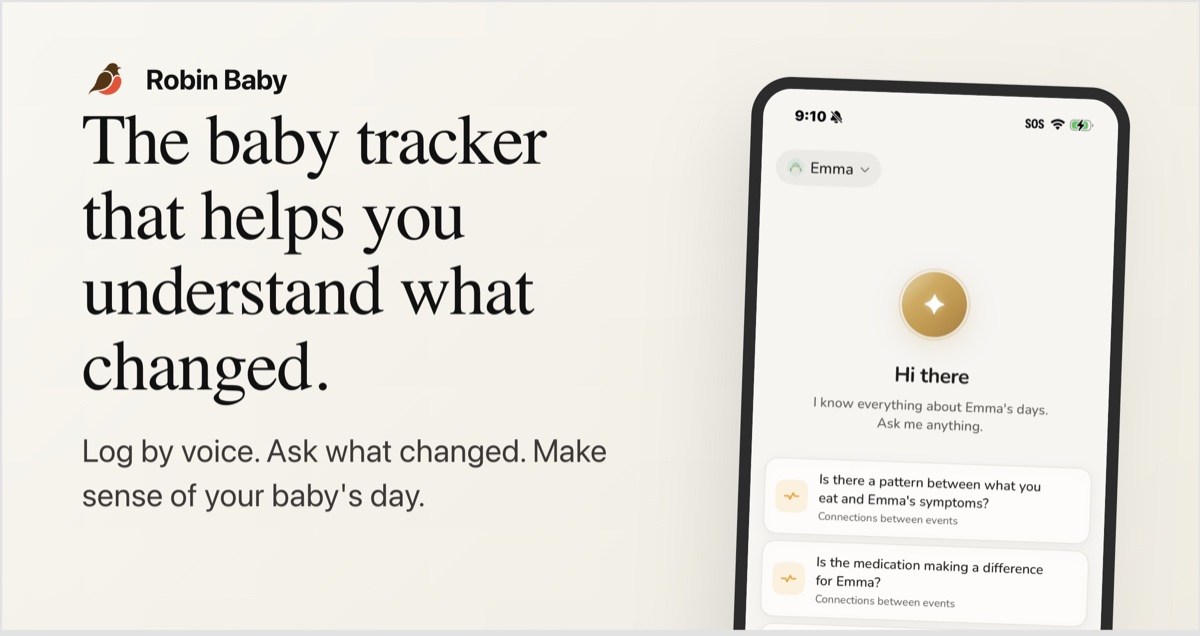
Those are the questions every parent wants to answer when the pediatrician asks. They’re also the questions you can’t answer from memory, no matter how diligent you are. That’s where Robin’s “second memory” comes in — Ask Robin anything from your logs, going back as far as you’ve tracked.
The features that make it possible
Three things make Robin different from every tracker you’ve tried:
Voice-first logging. Speak a full day in one sentence — “Mia nursed 15 minutes left, then a wet diaper at 8, then napped 9 to 10:30” — and the AI parses every event with the right timestamps. Designed for one-handed use while feeding, with a tired brain.
Snap daycare or nanny notes. Photograph the paper handoff sheet. AI vision extracts feeds, naps, and changes into your timeline in 3 seconds.
Ask anything. Your logs become answerable, going back as far as you’ve tracked.
What’s free, what’s premium
We made the free tier deliberately generous. Sleep forecast (predicting your baby’s next nap, bedtime, and wake windows from age-based rules + your last 14 days of logs) is free. Caregiver sync — sharing the timeline with your partner, nanny, daycare, or your mom — is free for up to 3 caregivers. Insights, exports, imports, unlimited manual logging: all free, forever.
Premium adds the AI features (voice logging, photo scan, Ask, doctor-ready PDFs) for $9.99/month or $59.99/year, with a 7-day free trial.
What’s next
This is the first post on the Robin Baby blog. Over the coming weeks we’ll publish:
- Sleep guides for newborns through 18 months (wake windows, regressions, nap transitions)
- Feeding deep-dives (breastfeeding, pumping schedules, introducing solids, allergen guidance)
- Product notes when we ship something worth talking about
- More from us — the parents who built it
If you’d rather subscribe, the RSS feed is here.
Thanks for being here at the start.
— the Robin Baby team
Tracking your baby's day with Robin?
Robin Baby is the voice-first baby tracker that remembers everything — feeds, sleep, growth, milestones. Free sleep forecast, free caregiver sync.

