 Robin Baby
How Long Does Dairy Stay in Breast Milk? What the Evidence Shows
Some sources say hours, others say weeks. What studies have measured, why dairy-free trials last 2 to 4 weeks anyway, and what to do if you eat dairy by accident.
This is general information, not medical advice. Talk to your pediatrician or a dietitian before changing your diet or your baby’s feeding.
Search this question and you’ll get two answers that don’t fit together. Some pages say dairy is out of your breast milk in about six hours. Others say it takes two to three weeks to leave your body. Both get repeated with total confidence.
The honest answer is that nobody has measured a single, universal clearance time, and the “hours” and “weeks” answers are actually about different questions. Here’s what the studies found, why the guidelines still say weeks, and what it means if you’re mid-trial and wondering when you’ll see a change.
Get care now, whatever your diet. Call 911 if your baby has trouble breathing, has swelling of the lips or face, or turns blue or goes limp. Go to the emergency department now for green or yellow-green (bile-stained) vomit. Get seen the same day for blood in vomit, forceful projectile vomiting, black or tarry stools, a lot of blood in the stool, refusing feeds, far fewer wet diapers than usual, or a baby who seems unwell, floppy or unusually sleepy. Call your pediatrician for any blood in the stool or poor weight gain. (Sources: NICE NG1, HealthyChildren, NHS.)
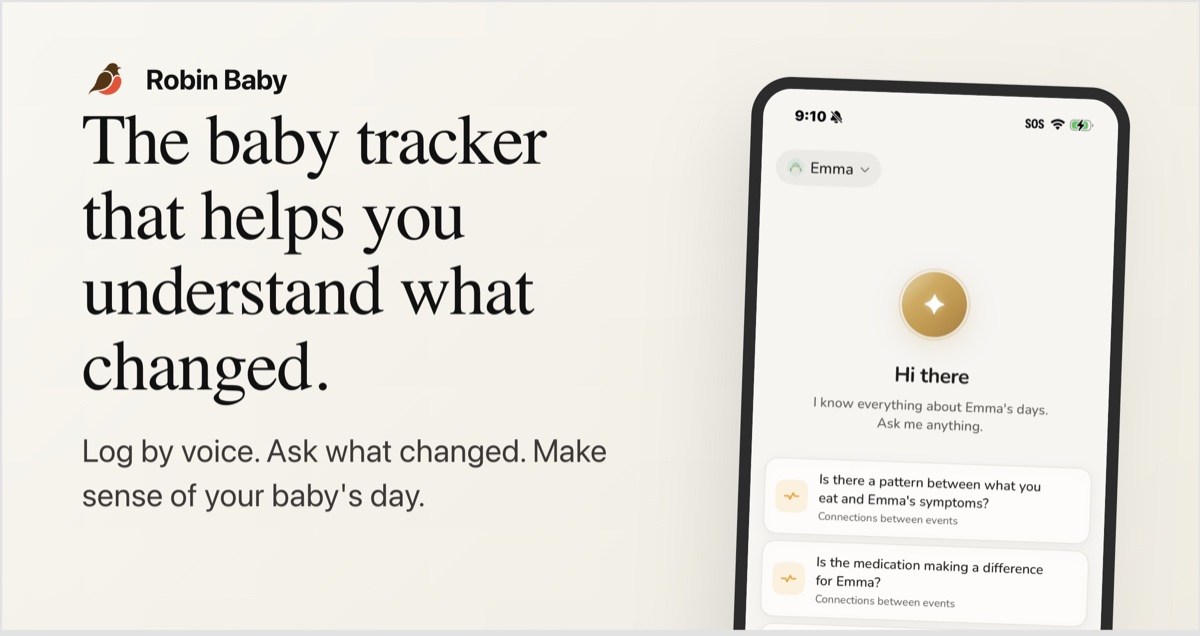
Doing a dairy-free trial? The hardest part is knowing whether anything changed. Robin Baby (we make it) has a free My Diet log for what you eat, with a dairy tag, next to your baby’s diapers, symptoms and feeds, so you can compare the weeks before and after. iPhone · Android · Diary guide
Three different questions hiding in one
When parents ask “how long does dairy stay in breast milk?”, they usually mean one of three things:
- Detection: how long can a lab find cow’s milk protein in my milk after I eat dairy?
- Improvement: how long after I cut dairy will my baby seem better?
- Confirmation: how long before we actually know whether dairy was the problem?
These have different answers, and mixing them up is where most of the confusion comes from.
Detection: what the studies measured
Cow’s milk protein does pass into breast milk, in tiny amounts. The Breastfeeding Network describes the level in breast milk as about 100,000 times lower than in cow’s milk. How long it lingers is where the studies disagree.
The “hours” answer mostly traces back to a study by Picariello and colleagues in Frontiers in Nutrition (2019). It’s careful lab work, but its limits matter:
- It studied one mother, who drank 200 mL (about 7 ounces) of cow’s milk.
- It tracked two selected milk protein fragments (peptides) in her breast milk.
- Those fragments appeared at 1 hour, peaked at 2 hours, and weren’t detectable at 6 hours.
- It found fragments, not intact cow’s milk proteins.
The “days” answer comes from other small studies. A 2022 scoping review in Foods by Franco and colleagues pulled together the research on cow’s milk proteins in human milk. Several studies found the highest levels 4 to 6 hours after mothers drank milk. Others detected beta-lactoglobulin, a main cow’s milk protein, up to 7 or 10 days later. One of those, a 2017 study of 19 mothers by Matangkasombut and colleagues, found it up to 7 days after drinking milk. One study even reported it in samples after weeks of avoidance. The review notes that the lab methods differ and that some are prone to error, and concludes that a clear relationship between a mother’s diet and the allergen content of her milk “cannot be founded.”
The ESPGHAN 2023 position paper sums it up more broadly: food proteins such as egg, soy, cow’s milk and wheat “are detectable in breast milk for many hours or days after ingestion.”
So the fair summary is this: in the small studies we have, cow’s milk protein shows up in breast milk within hours, and in some studies it has been found for days. The studies are tiny, measure different things in different ways, and people vary. Anyone giving you an exact countdown is claiming more than the evidence shows.
You’ll also see the claim that dairy takes “10 days to 3 weeks” to leave your body. We couldn’t find primary research that measured it that way. Treat it as a rule of thumb, not a finding.
Improvement: why the guidelines still say weeks
Even if protein fragments clear your milk quickly, your baby’s symptoms don’t switch off on the same schedule. Guidelines from ESPGHAN, the World Allergy Organization, the 2018 NASPGHAN/ESPGHAN reflux guideline and the Academy of Breastfeeding Medicine (Protocol #24) all describe a maternal dairy-free trial of 2 to 4 weeks.
Why so long? A few reasons, some from the guidelines and one just practical:
- Delayed reactions are slow in both directions. WAO notes that non-IgE (delayed) allergy symptoms typically appear several hours to days after exposure. Settling down after the food is gone can take time too.
- Different symptoms settle at different speeds. ABM #24 says most babies with blood or mucus in the stool from allergic proctocolitis improve within 72 to 96 hours, but some need 2 to 4 weeks. The Breastfeeding Network says improvement may be seen after 3 days but may not resolve for 4 weeks. ESPGHAN mentions one study where babies with severe eczema took 6 to 8 weeks to improve, while noting that could also be natural change over time.
- Babies have good days and bad days anyway. A few days of logs can’t tell a real change from normal ups and downs. A longer window gives a fairer comparison with your baby’s usual pattern.
Notice what’s not on that list: a proven timeline for how long the baby’s gut takes to recover. That may well be part of it, but the guidelines don’t pin a number on it. What they agree on is that 2 to 4 weeks is a reasonable time to judge a trial.
Confirmation: the step that answers the question
Improvement alone doesn’t prove dairy was the cause. ESPGHAN notes that up to 20% of breastfed babies with symptoms such as rectal bleeding get better without any change to the mother’s diet. Many everyday baby symptoms also ease with time on their own.
That’s why every guideline above pairs the trial with reintroduction: dairy goes back into your diet, and you watch whether symptoms return. WAO describes a planned reintroduction at home over about a week. If symptoms clearly come back, that supports a diagnosis of cow’s milk protein allergy. If they don’t, you can usually go back to eating normally. And if nothing improved during the trial in the first place, ESPGHAN stresses that the diet shouldn’t simply continue.
So the real answer to “how long until we know?” is roughly the trial plus the reintroduction, planned with your pediatrician.
If you eat dairy by accident
It happens to almost everyone. Dairy hides in bread, sauces, processed meat and restaurant food, and you’re doing this on very little sleep.
- Don’t panic. One exposure is a data point, not a failure.
- Write it down: what it was, roughly how much, and what time.
- Keep logging your baby as usual over the next few days, without reading too much into any single diaper.
- Ask your pediatrician or dietitian whether it changes your trial timeline. Don’t guess, and don’t quietly leave it out of the diary. An honest note helps your clinician read the rest.
Keeping track without keeping it all in your head
The whole point of a 2 to 4 week trial is comparison: before, during and after. That only works if you can see what you ate and what your baby did, with times, across weeks.
We make Robin Baby, so take this as one option among many. Robin Baby lets you log your own meals in a free My Diet log, alongside your baby’s diapers, symptoms and feeds on one timeline, which both parents can see. A paper diary works just as well. We wrote a full guide to running a dairy-free breastfeeding trial, with a diary template you can copy.
The short version
Small studies find cow’s milk protein in breast milk within hours of eating dairy, and some have found it for days. There’s no proven universal clearance time. Dairy-free trials last 2 to 4 weeks because symptoms take time to settle and to judge, not because of a countdown in your milk. A change only means something once reintroduction confirms it. Log what you can, be kind to yourself about slip-ups, and make the plan with your pediatrician.
Questions about dairy and breast milk
How long does dairy stay in breast milk?
There's no proven single answer. Small studies have found cow's milk protein fragments in breast milk within an hour or two of drinking milk, often fading within the same day, but other small studies have detected them for days. ESPGHAN describes food proteins as detectable in breast milk for many hours or days after eating them.
How long after cutting dairy will my baby improve?
It varies. The Academy of Breastfeeding Medicine says most babies with allergic proctocolitis improve within 72 to 96 hours, but some need 2 to 4 weeks. That's why guidelines run a dairy-free trial for 2 to 4 weeks before judging it. Eczema can take longer.
Why do dairy-free trials last weeks if dairy leaves milk in hours?
Because the question isn't only when the protein is gone. Delayed allergy symptoms take time to settle, and day-to-day ups and downs make a few days of logs hard to read. Guidelines allow 2 to 4 weeks so there's a fair chance to see a real change, then confirm it with reintroduction.
I accidentally ate dairy during my trial. Do I have to start over?
Don't panic. Note what you ate, roughly how much and when, and keep logging your baby's symptoms. Then ask your pediatrician or dietitian whether it changes the plan. One slip doesn't make your diary useless; an honest note makes it more useful.
Should I pump and dump after eating dairy?
This isn't something the CMPA guidelines we reviewed recommend. Ask your pediatrician before discarding milk, since the usual advice is to keep breastfeeding during a dairy-free trial.
If my baby improves after cutting dairy, does that prove CMPA?
Not by itself. Some babies get better over the same weeks with no diet change. Guidelines confirm the diagnosis by reintroducing dairy and watching whether symptoms come back, with your clinician's plan.
Tracking your baby's day with Robin?
Robin Baby is the voice-first baby tracker that remembers everything — feeds, sleep, growth, milestones. Free logging and timers, free caregiver sync.

